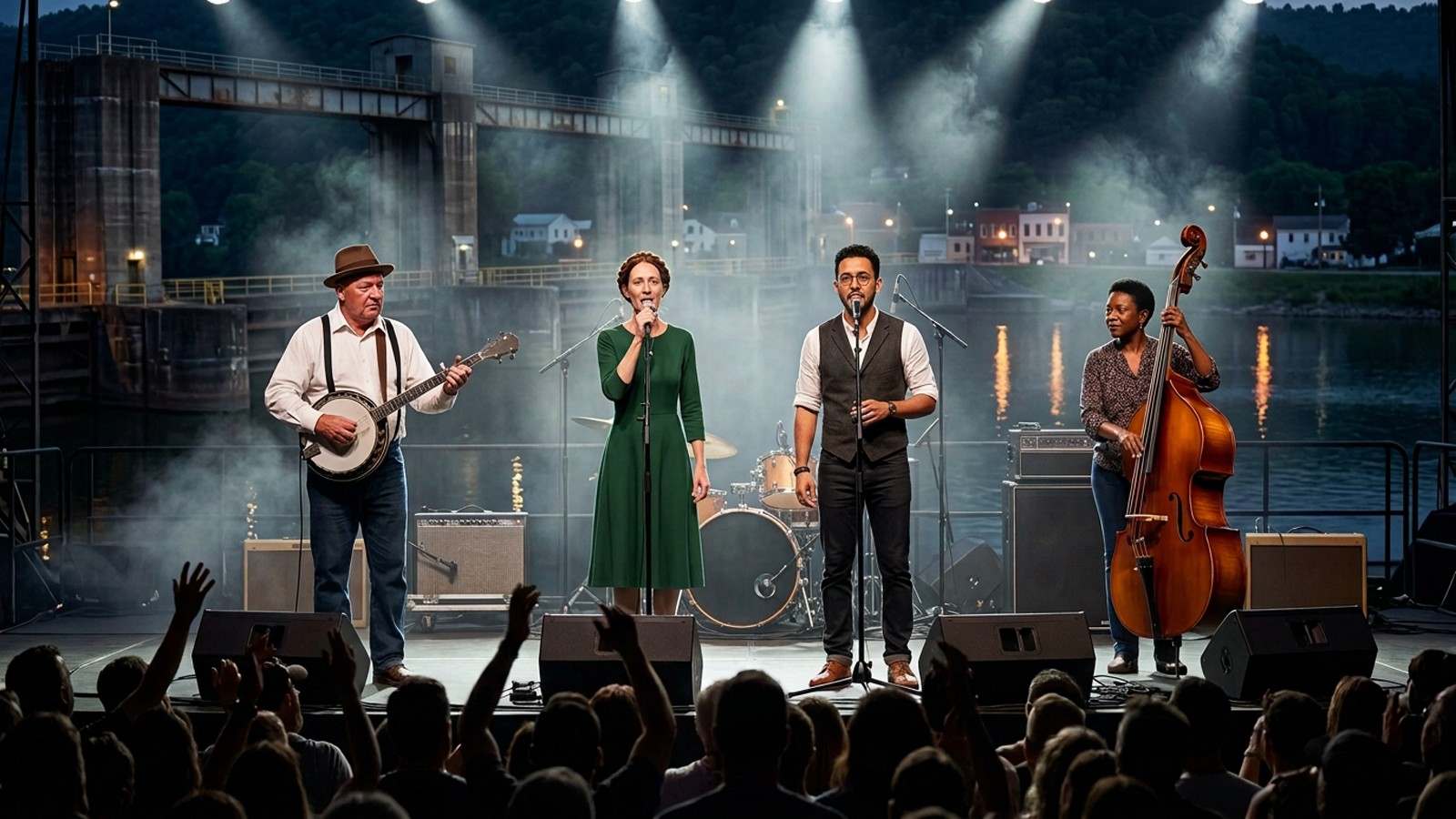
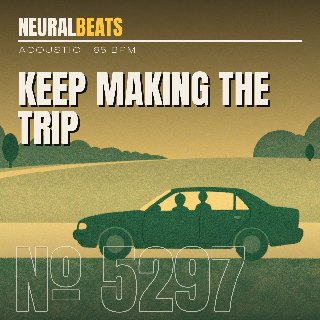
The town's ferry ran for ninety years, until a four-lane bridge went up eleven miles downstream. The ferry stopped, but people on both banks kept crossing anyway. They drove the long way for Sunday dinners, wrote letters and kept up their visits. Slackwater Hymnal started on the ferry landing in the summer of 2019. Ray Ostrander had just retired after thirty years tending the lock, and he brought his banjo down to the empty dock most evenings. Merritt Gaines heard him from the care home where she worked and came back the next night with her fiddle. Wes Kincaid was home between touring jobs and couldn't stay away from a good jam. Tanisha Pruitt, the high-school band director, turned up with an upright bass in the back of a minivan and kept time like a metronome with a sense of humour. They play hard-driving bluegrass, slow old-time waltzes and the odd newgrass detour Wes talks them into. Every song is about one idea: a connection only lasts if somebody keeps making the trip. Their first record was cut in the old lockhouse with one microphone. They still pass around a coffee can for the river cleanup fund at every show.
Slackwater Hymnal is made up: the members, their story, their faces and their voices are AI-generated for NeuralBeats Originals. Their songs are written and sung by AI, two band songs an hour on the live stream; name the band in the chat and theirs is the next new song.







The band
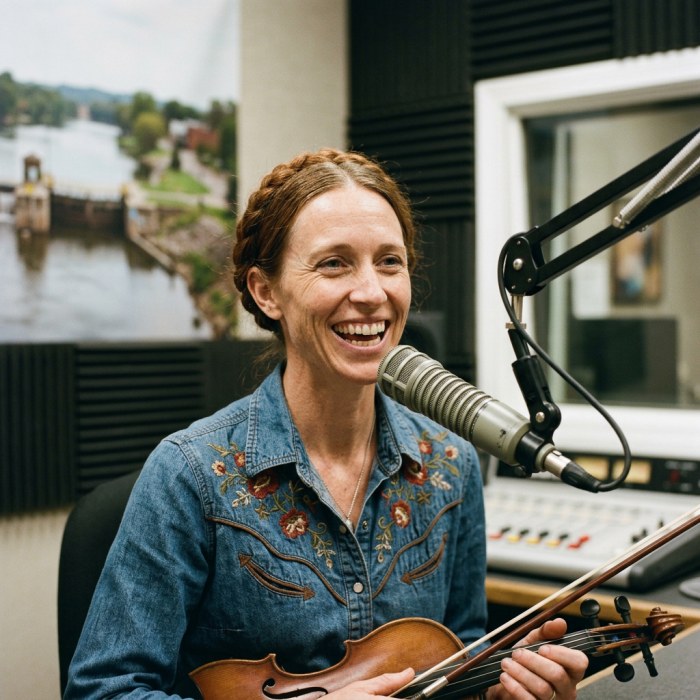 Merritt Gainesfiddle, lead vocals
Grew up singing in a small Methodist choir and won state fiddle contests by fifteen. She turned down a touring offer at nineteen to study music therapy, and she still works three days a week running music sessions at the riverside care home. She is quiet, exacting and allergic to fuss. In the studio she will sing a line twenty times to get the vowel right, and she gets cool and polite with anyone who calls a take 'good enough.' On stage she hardly moves and lets her high, clear voice do the work. She dislikes interviews and nearly always passes the microphone to Wes.
 Wes Kincaidmandolin, lead vocals
A mandolin prodigy who started at eight and was touring with a regional band at seventeen. He has spent his twenties as a hired picker on other people's records, and he still takes session work in Nashville between Slackwater tours. He is restless and curious and talks fast. He arranges classical violin pieces for mandolin to stay sharp and brings forty ideas to every rehearsal, then gets impatient when the band only wants three. On stage he leans into the single microphone, trades breaks with Merritt and tells long stories between songs. He is the band's chatterbox, and he mostly enjoys the attention as a way to get people listening.
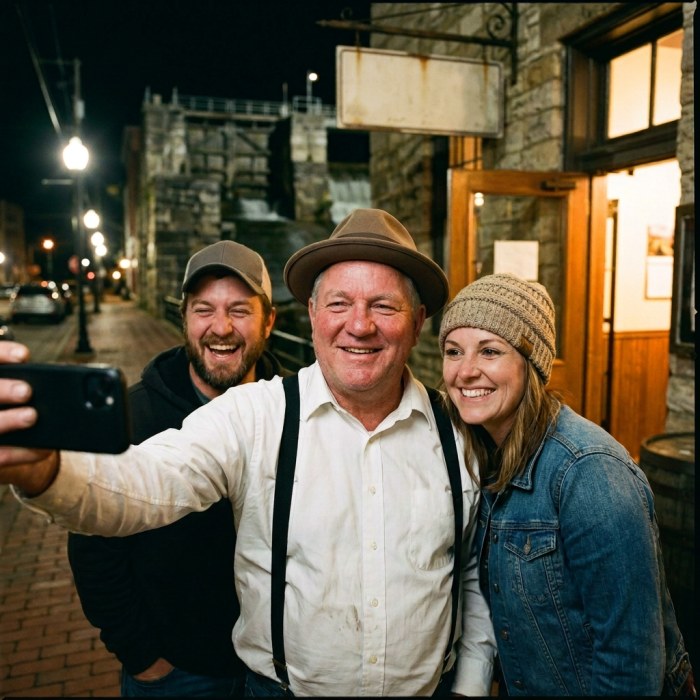 Ray Ostranderbanjo
Tended the river lock for thirty years and played banjo on the porch the whole time, learning three-finger rolls from records and from an uncle. Before Slackwater he played only at church suppers and fire-hall dances. He is unhurried and dry-humoured, and nobody can rush him. He thinks most songs are already finished before people start fussing with them. In the studio he plays a part once, maybe twice, and goes outside for coffee. On stage he stands still and nods along, then tears into a break at full speed and goes right back to looking half asleep.
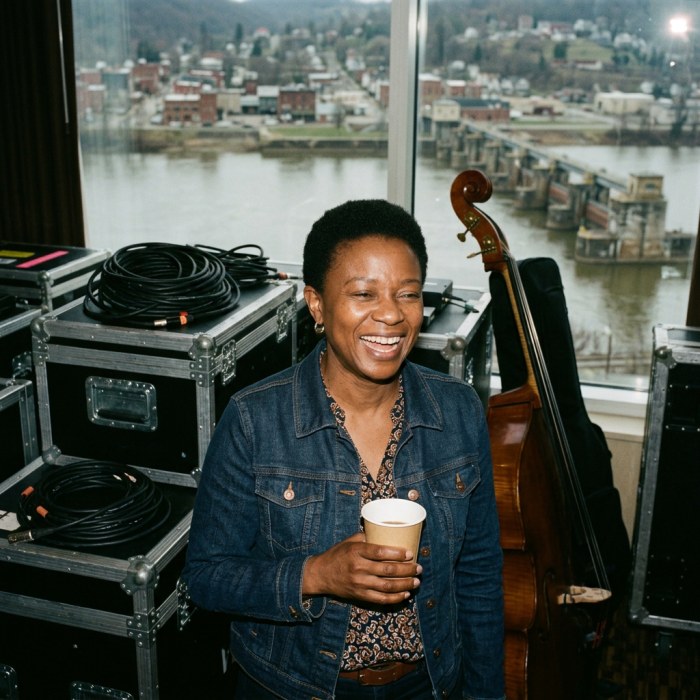 Tanisha Pruittupright bass
Studied jazz bass at a state university, played the regional wedding and supper-club circuit for ten years, and now directs the high-school band in town. She is the organiser: she does the set lists, the van, the money and the calendar. She is warm, blunt and tolerates zero lateness. In the studio she is the one who says when a take is done. On stage she grins at the others' mistakes and covers them before anyone in the audience notices.
What they sing about
Driving an extra twenty miles to see someone isn't a burden. It's how they know you meant it.
Progress built the bridge, and that's fine. Nobody should pretend the ferry wasn't where half the town fell in love.
High water and low water both come back around. The town is defined by who shows up with sandbags, not by the flood.
A slow letter beats a fast message, because somebody sat still long enough to think of you.
The people in the care home taught the town its songs. Singing those songs back to them is a debt, not a favour.
Go if you have to, nobody holds it against you. Just keep the porch light on your side of the call.
A steady beat is a kindness. It lets everyone else take chances.
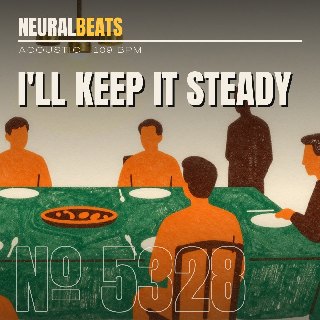
The table matters more than the food. An empty chair should be noticed, and then filled.
Thirty years at one job is no failure of ambition. Doing something properly for that long is a kind of music.
Anybody who walks up to the jam is welcome. You learn their tune before you ask their name.